
Guide2024-02-16
Silverfish: damp, dark and paper, and what to do about them
Silverfish do not bite, but they eat paper, glue and some fabrics. Fix the damp first, then treat the edges they travel along.
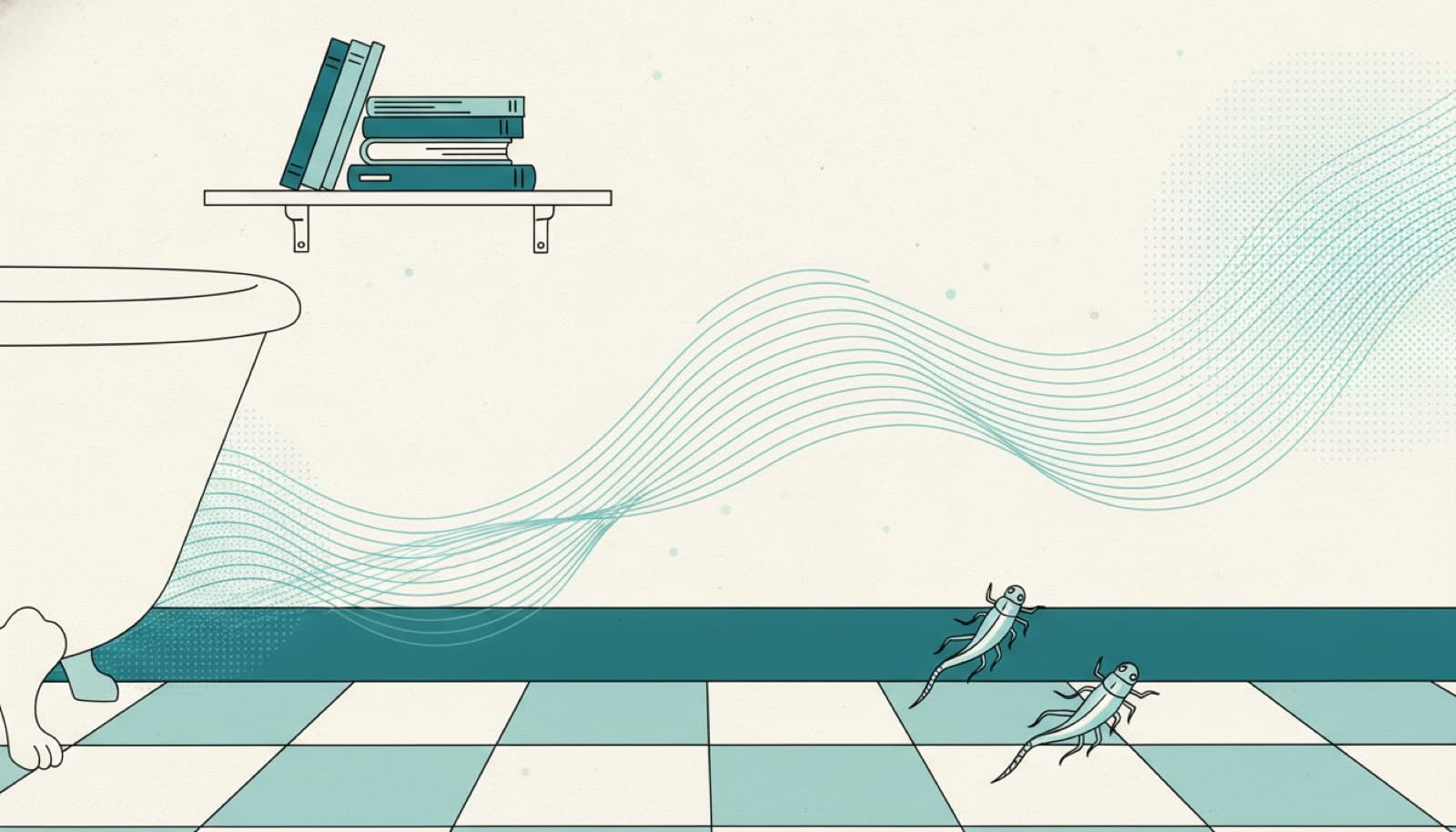
Silverfish (Lepisma saccharina) are small, wingless insects with a silvery sheen and a quick, fish-like way of moving. They are active at night and spend the day in cracks and crevices, which is why most people only see one when they switch on the bathroom light.
They do not bite and do not transmit diseases to people. The problem is their appetite: they feed on starchy material such as paper, book glue, wallpaper paste and some fabrics, which puts books, documents and stored clothes at risk. Libraries, archives and museums treat them as a serious pest.
What silverfish need
Humidity and darkness. Bathrooms, kitchens, cellars, attics and the backs of bookshelves suit them well. They lay their eggs in small batches in crevices and keep moulting throughout their lives, so a population builds quietly.
Why control is difficult
Insecticide sprays reach the few silverfish that are out in the open and miss the rest in the cracks. Traps catch some, but rarely solve the problem. Home remedies such as diatomaceous earth and cedar oil have their followers, and their limits.
What works best is targeted: change the conditions they depend on, close the gaps they hide in, and make the routes between hiding places unattractive.
Fix the conditions first
- Bring the humidity down: ventilate, run a dehumidifier in the cellar, fix drips and leaks.
- Replace cardboard storage with sealed plastic boxes.
- Seal cracks along skirting boards, around pipes and behind bath panels.
- Keep books and papers away from cold outside walls and damp corners.
Then treat the edges
- Skirting boards and the floor to wall junction in bathrooms, kitchens and cellars.
- The back and underside of bookshelves and fitted cupboards.
- Around pipes, behind the bath panel and under the sink.
- Storerooms and archives: shelving uprights and wall junctions.
Clean and dry the surfaces first, and test textiles and painted surfaces in a hidden corner.
Use biocides safely. Always read the label and product information before use.