
Guide2026-07-24
Insects on window sills: where they get in each summer
Insects on window sills in summer come in along the frame, the seals and the gaps around them. Where they get in, and how to treat it from the inside.
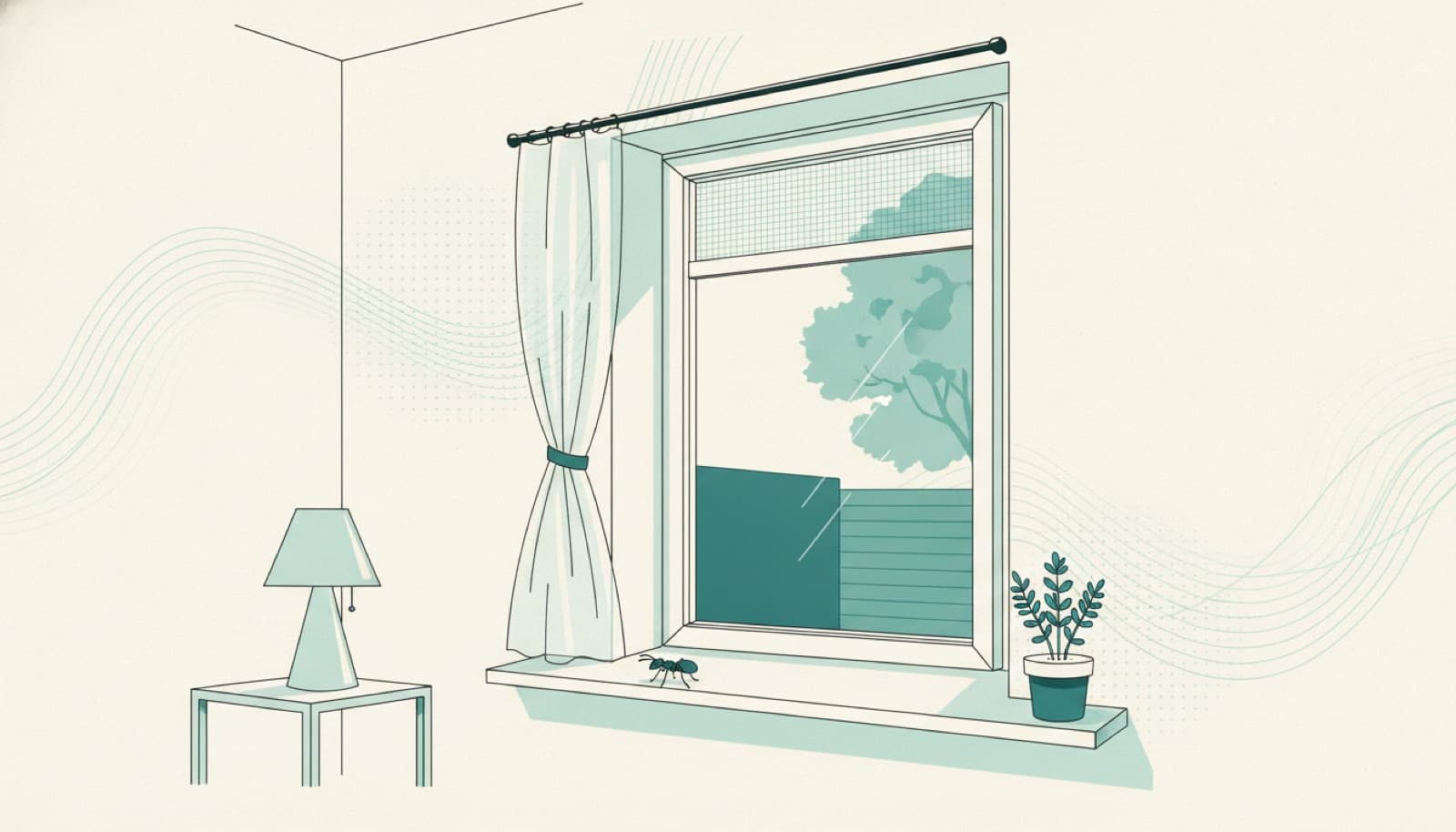
In summer the windows stay open for longer, and the sill is often where you first notice what came in from outside. The sill, the frame and the seals are a small area, which makes them one of the easiest places in a home to treat properly.
Why insects end up on window sills
An open window after dark is the obvious way in, and a lamp beside it makes it busier. A 2024 study in Nature Communications filmed night-flying insects around lights and found that they do not steer towards a lamp. They tilt their backs towards it, as they would towards the bright sky, and end up circling it.
A light just inside an open window brings that circle into the room. Close the curtains or switch the lamp off before you open the window in the evening, not after.
Crawling insects use the window differently. Ants follow edges: in a laboratory study, ants given two otherwise identical routes to food chose the one with a wall along its edge almost every time. The corner where the wall of the house meets the window frame is exactly that kind of line, and indoors it ends on the sill.
Flies use the frame as a perch. The small dark specks along the top of a frame or the edge of a sill are left by resting flies, and they show you where they like to sit.
Where the window lets them in
Most of the ways in are small, and none of them is the glass. Check these on every window you open in summer, starting with the sunny side of the house.
- The joint between the frame and the wall, inside and out, where the sealant has cracked or come away.
- The rubber or brush seals around the opening part of the window, which can harden, shrink or tear with age.
- The small drainage slots at the bottom of the outer frame, which let rainwater out and let small insects in.
- The gap along the top of a window left on tilt overnight.
- The ends of the sill, where it meets the sides of the opening.
- The edge of a fly screen whose frame no longer sits flat.
Small covers for drainage slots are sold for exactly this reason, and they still let the water out. Never seal the slots shut, because the water has to go somewhere.
Treating the window sill and frame from the inside
Start with a clean, dry window. Wipe the sill, the frame and the seals with soapy water, get the dust and dead insects out of the corners and the groove the window closes into, and let it all dry. The coating bonds to the surface, not to a film of dust.
A surface treatment works on the route rather than on the room.
With the window open, apply a thin, even layer along the inside of the frame, the full length of the sill, the corners where the sill meets the sides of the opening, and the joint between the frame and the wall. Overlap each pass slightly so there is no gap in the line.
On the seals, work along the edge rather than soaking the rubber. Seals and paint finishes vary, so try a small, hidden section first and let it dry before you do the rest.
If it is a kitchen window and food is ever put down on the sill, treat the frame and the edges and leave the open surface of the sill alone. Read the label before you start, and leave the window open until every treated surface is dry.
The window frame is where flying and crawling insects share a route.
Seals, screens and the rest of the summer
Windows get cleaned often, and that matters here. Cleaning the glass leaves the frame alone, but scrubbing the sill with detergent takes the coating off with the dirt, so treat that edge again afterwards.
Treat at the start of summer, look at the sunny side again in high summer, and treat any frame you have washed down or repainted.
Then close what you can. Replace a seal that has gone hard or split, renew a cracked sealant joint, and fit a screen to the windows you open at night. The treatment holds the edge, and the seal and the screen close the gap.
For the insects you are most likely to find on a sill this summer, the Ants and Mosquitoes pages on this site explain where each one is found and which surfaces to treat.
Use biocides safely. Always read the label and product information before use.