
Guide2026-07-10
Holiday home opening clean: frames, skirting and beds
A holiday home opening clean is the day to treat the frames, skirting, bed bases and storage that stood closed all winter, before the first guests arrive.
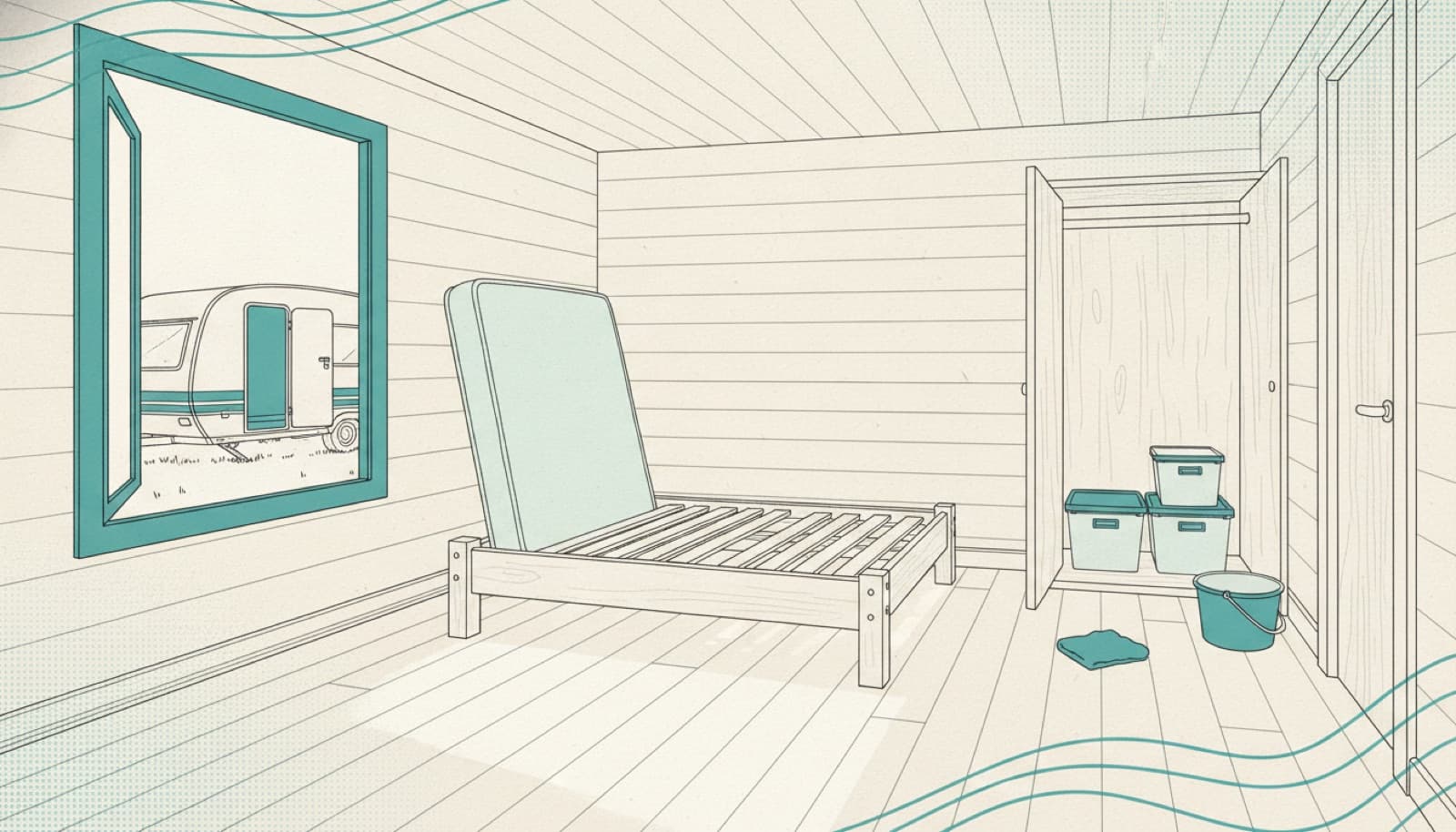
A holiday home, cabin or caravan that stood closed all winter is cool, quiet and undisturbed, which suits several insects very well. The opening clean is the one day in the year when every frame, skirting board and bed base is within reach anyway, so it is the day to treat them too.
What a closed season leaves behind
Flies on the inside of the upstairs windows at the start of the season are often cluster flies (the genus Pollenia). In autumn they gather on sunny walls, crawl in through gaps around window frames and under the eaves, and spend the winter in roof spaces and upper rooms. They are not a sign of poor hygiene, and they head back out once it warms up.
Silverfish are the other regulars. They do well where the air is damp and still, and a building with the heating off and the windows shut for months is exactly that. They feed on starch, paper and glue, which makes the cardboard boxes in the storage cupboard a pantry as well as a hiding place.
Bed bugs are less common, but they matter more in a home that is rented out or lent to friends. They can go months without feeding, and longer in the cold, so a closed winter does not reset the house. If a guest brought them in last season, they can still be there now.
Start the holiday home opening clean with fresh air
Open every window, every cupboard and every locker before you clean anything. Moisture builds up in a closed building, and even a caravan that stood with its cushions upright and its lockers ajar needs a few hours of moving air.
Look for damp before you look for insects: a stain under a window, mould behind a mattress, condensation on the inside of the caravan walls. A slow leak keeps a corner habitable all year, and fixing it does more than any treatment.
Then vacuum. Window sills and frames first, because that is where last autumn's flies ended up, then the skirting, under the beds and the floor of every wardrobe. Swap cardboard storage boxes for sealed plastic ones. Wipe the edges you are going to treat with a cloth and mild soapy water, and let them dry. A clean, dry surface is what a coating bonds to.
The surfaces to treat during the opening clean
Once the rooms are clean and dry, treat the routes rather than the open floor. The edges below are where insects move between a hiding place and the rooms people use.
- Window frames and sills, upstairs and on the sunny side first.
- Door frames and thresholds, including the terrace door and the caravan step.
- Skirting boards and the floor to wall junction, all the way round.
- Bed bases, slat ends, frame joints and the back of the headboard.
- Bunk frames, and the underside and edges of fixed caravan beds and seating.
- The base, back edge and shelves of wardrobes, lockers and storage cupboards.
Apply a thin, even layer along each edge, with a slight overlap between passes. Read the label first. Holiday homes are full of finishes nobody chose recently: old varnish, painted pine, caravan laminate. Try a hidden spot on each and let it dry before doing the whole run.
Keep the treatment off kitchen worktops, the dining table and anything food touches directly.
Drying time before the first guests
Treat on the first morning of the opening weekend, not an hour before guests arrive. Let every treated surface dry fully with the windows open before you make the beds or put anything back in the cupboards. A cold cabin dries more slowly than a heated flat, so give it the time.
Washing a treated edge with detergent takes the coating off with the dirt. Treat that edge again after a deep clean, for example at a changeover in the middle of the season.
If the house is rented out, add a two minute check to each changeover: the bed frame joints, the mattress seams and the luggage rack. Small dark specks along a seam are the early sign of bed bugs, and they show up before the insects do.
When a clean is not enough
Live bed bugs, bites in a line, or silverfish in every cupboard despite a dry house are past the point of a spray bottle. Call a pest control professional. They can bring the population down and treat the surfaces afterwards, which is the order that works.
Cluster flies in the roof space are a different case. Sealing the gaps around window frames and under the eaves helps a little, but a vacuum cleaner on the first day of the season is the simplest first step.
The pest pages on this site go further: the bed bugs page and the silverfish page show where each one hides and which edges to treat before the first weekend away.
Use biocides safely. Always read the label and product information before use.