
Guide27 October 2026
Cockroaches in the kitchen in winter: where to look indoors
Cockroaches in the kitchen in winter hide behind appliances, under sinks and along pipes. Where to look indoors, what to clean, and when to call a pro.
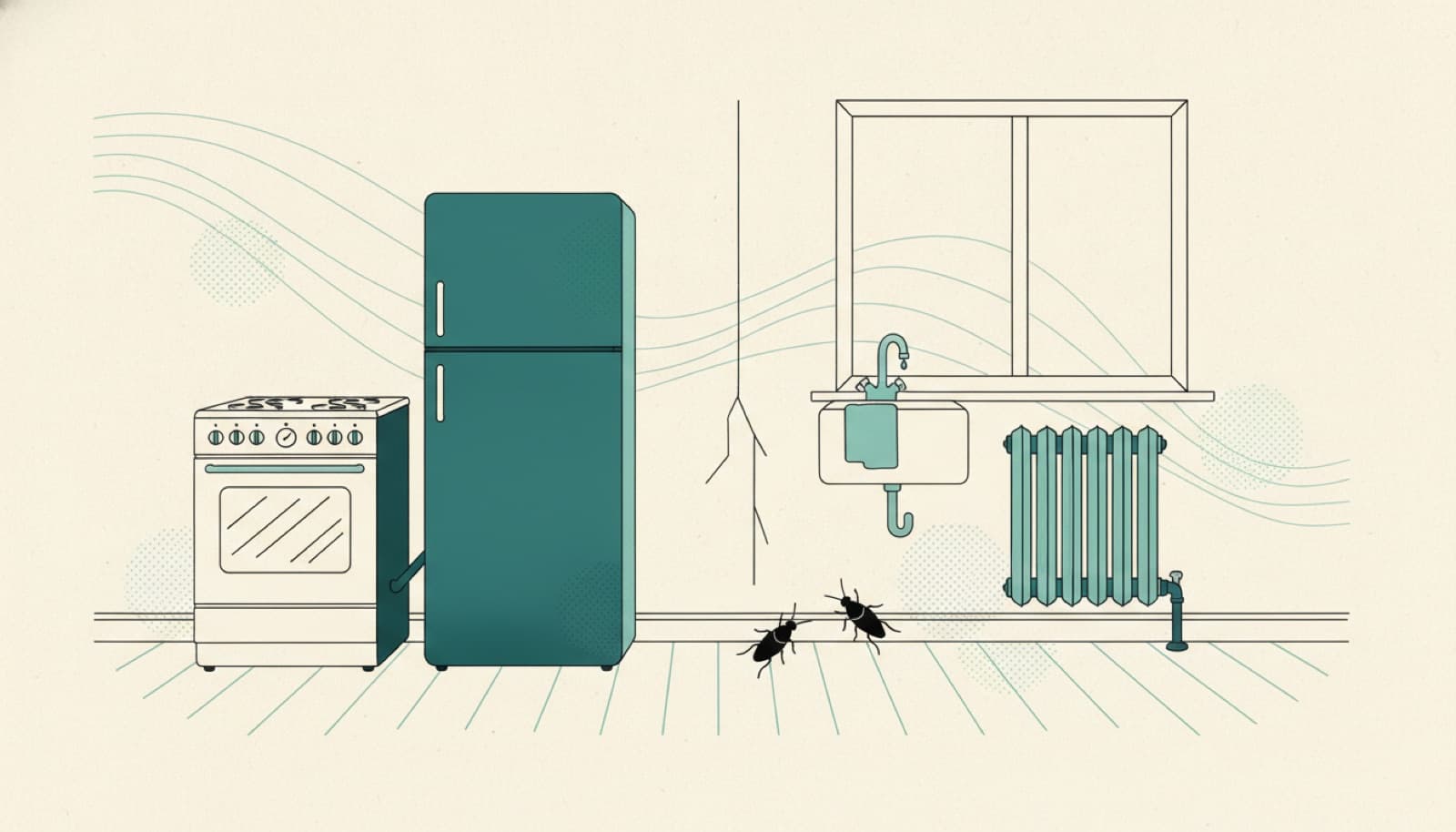
A heated kitchen is one of the few places where cockroaches stay comfortable all winter. This guide shows where to look indoors, what to clean first, and where a surface treatment fits in.
Why the kitchen stays warm enough for cockroaches
Cold weather outside does not clear cockroaches out of a heated home. The kitchen gives them warmth from the cooker, the fridge and the radiator, water from the sink and dishwasher, and crumbs in every gap. A few that settle in one of these rooms can keep breeding there through the season. They also arrive in shopping bags, cardboard boxes and second-hand appliances, so winter is the time to look, not to wait for the first sighting. Warm, damp corners near the sink and dishwasher suit them best.
Where to look first
Walk the kitchen with a torch in the evening, when cockroaches are most active. Start with these five spots.
- Behind and under the fridge and the cooker, where the motors give off warmth.
- Under the sink, around the waste pipe and behind the dishwasher.
- Along the skirting boards and in the joint between the worktop and the wall.
- Where pipes and cables enter the wall, and behind the radiator.
- The cupboard under the bathroom basin, and the floor behind the toilet.
Keep the kitchen clean and dry
Crumbs, grease and standing water keep cockroaches fed and watered. Pull the fridge and cooker out once a month, wipe the floor and the wall behind them, and take the bin out every evening. Dry the sink and the tray under the fridge, and fix any dripping tap at once, because a damp cupboard is one of the first places they search. A tea towel left damp over a tap, a sponge left on the sink and an open bin lid give them food and water.
Seal the gaps you find
Look at what the torch shows you. Gaps around pipes, a split in the sealant behind the sink and a loose skirting board are entry and hiding points that stay open all winter. Fill them with a flexible sealant, let it cure, and check the spot again after a month. Sealing takes a few minutes per gap and costs little, and it stops the same opening being used twice.
Where a treated surface fits
Once the kitchen is clean and dry, treat the cracks and edges rather than the open floor. Treat the joints along the skirting boards, the pipe entries and the spots behind the appliances, where cockroaches move between hiding places and food.
Treat the same edges again after a deep clean, once the surface has been cleaned properly.
Note what you find before you call
Write down the room, the time of day and where each insect was seen, and take a photo of any egg cases or droppings. A short note helps a pest control operator plan the first visit, and it shows which edges to watch in the weeks that follow.
When to call a professional
Repeltec does not clear an infestation. If you see cockroaches during the day, find egg cases, or spot them in several rooms, a licensed pest control operator should deal with the active population first. A repellent surface layer belongs after that, as part of the follow-up to cleaning and sealing. Ask for a written plan that names the rooms and the follow-up visit.
The cleaning and sealing steps above cost little. For the kitchen edges and cracks, see the product page on repeltec.com and read the label before use. Clean one zone each weekend rather than the whole kitchen at once, so the work stays manageable.
Use biocides safely. Always read the label and product information before use.