
Guide12 September 2026
Bed bugs in second-hand furniture: a student room checklist
Bed bugs in second-hand furniture are easy to miss on moving day. What to check on a bed, sofa or desk before it enters a student room, and what to treat.
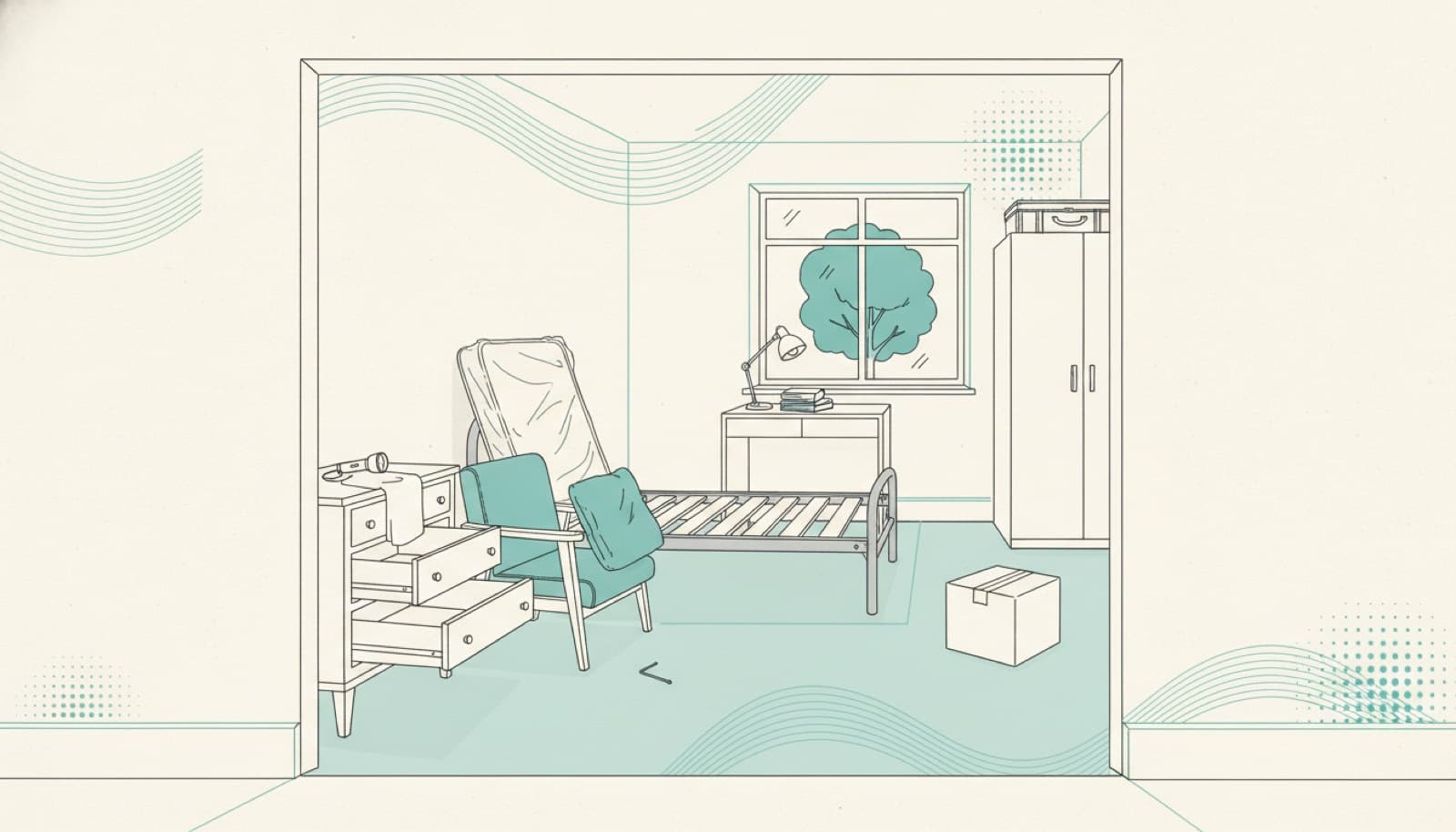
September is when student rooms fill up with furniture from the last tenant, a marketplace listing or the pavement outside. Second-hand furniture is also one of the ways bed bugs reach a new room, and a few checks before a piece comes through the door are the cheapest part of the move.
How bed bugs travel in second-hand furniture
Bed bugs do not walk in from the garden. According to the German Environment Agency (Umweltbundesamt), they spread mainly when infested items are moved: suitcases and bags, but also used furniture and other goods.
Nor are they a sign of a dirty home: the same agency calls that link a widespread misconception, and the NHS notes that bed bugs turn up in clean and dirty places alike.
They are also patient. The US Environmental Protection Agency (EPA) says bed bugs can survive several months to a year without feeding, so a sofa that stood in a garage all summer is not automatically empty.
And they are flat. The EPA puts it simply: a crack wide enough for a credit card is wide enough for a bed bug. Furniture is mostly cracks: joints, screw holes, seams and the gaps behind drawers.
What to check before you carry it home
See the piece in daylight, with a torch and a white tissue. The University of Georgia Extension suggests wiping seams and joints with something pale, which shows marks you would miss on dark wood.
You are looking for signs rather than insects. The EPA lists small dark spots that bleed into fabric like a marker dot, rusty stains, pale eggs about a millimetre long, and the empty skins young bed bugs shed as they grow.
- Bed frames and headboards: the corner joints, the ends of the slats, and every screw and bolt hole.
- Mattresses: the seams, the piping along the edge and the label.
- Divan bases: the thin fabric on the underside, which you can lift at a corner to look inside.
- Sofas and armchairs: under the cushions, along every seam, and the underside, with the piece tipped onto its back.
- Chests of drawers and desks: take the drawers out and check the joints and the runners.
Furniture left on the pavement needs the most caution: it may look fine, but nobody can tell you where it stood. A mattress or upholstered chair from the street is the one to walk past.
Moving second-hand furniture into a student room
Clean the piece before it comes into the room, not after. Vacuum every seam and joint in the hallway or outside, then empty the vacuum into an outdoor bin.
Take bed frames apart if they arrive assembled: Michigan State University Extension notes that dismantling a frame exposes hiding places you cannot otherwise reach. Check the joints again as you rebuild it.
Wash and dry removable covers hot, if the care label allows. The NHS advises a 60 °C wash and a hot dryer for bedding and clothing.
In student halls with a shared laundry room, the EPA suggests carrying washing to and from the machines in a plastic bag and folding it at home.
Treating the bed frame, skirting and luggage area
Once the furniture is clean, dry and assembled, treat the edges around it rather than the open floor. Bed bugs move between their hiding places and the bed, so the edges in between are where a treatment belongs.
Start with the bed: the frame joints, the ends of the slats and the back of the headboard. Then the skirting behind and beside it, and the wall edge where the desk stands.
Add the base and back edge of a second-hand chest of drawers or desk, and the frame of a sofa or armchair, not the cushions. Finish with the spot where the suitcase lives and, if the room opens onto a shared corridor, the door frame and threshold.
Apply a thin, even layer along each edge, overlapping slightly. Read the label, and test a hidden spot first on old varnish, veneer or painted wood. Keep the treatment off the desk top and anything food touches directly.
Let every surface dry fully with the window open before you make the bed.
Put the date in your phone. Steam cleaning or scrubbing a treated edge removes the coating, so treat that edge again afterwards.
When to tell the landlord and call a professional
Bites alone are a poor guide. The EPA notes that bed bug bites can look like other insect bites or a rash, and some people do not react at all. Dark spots along a seam, shed skins or live insects are clearer signs.
In shared housing, tell the landlord or accommodation office straight away. Bed bugs can move between flats along corridors and through gaps around skirting.
Then call a pest control professional. The Umweltbundesamt says a home infestation cannot be fully cleared with do-it-yourself measures, and that the wrong measures can make it worse. A professional brings the population down and can treat the surfaces afterwards, which is the order that works.
Take a clear photo of anything you find: the EPA points out that carpet beetles are often mistaken for bed bugs.
The Bed bugs page on repeltec.com shows where they hide in a bedroom and which edges to treat first. Read it before moving day.
Use biocides safely. Always read the label and product information before use.