
Vehicles, terminals and public buildings
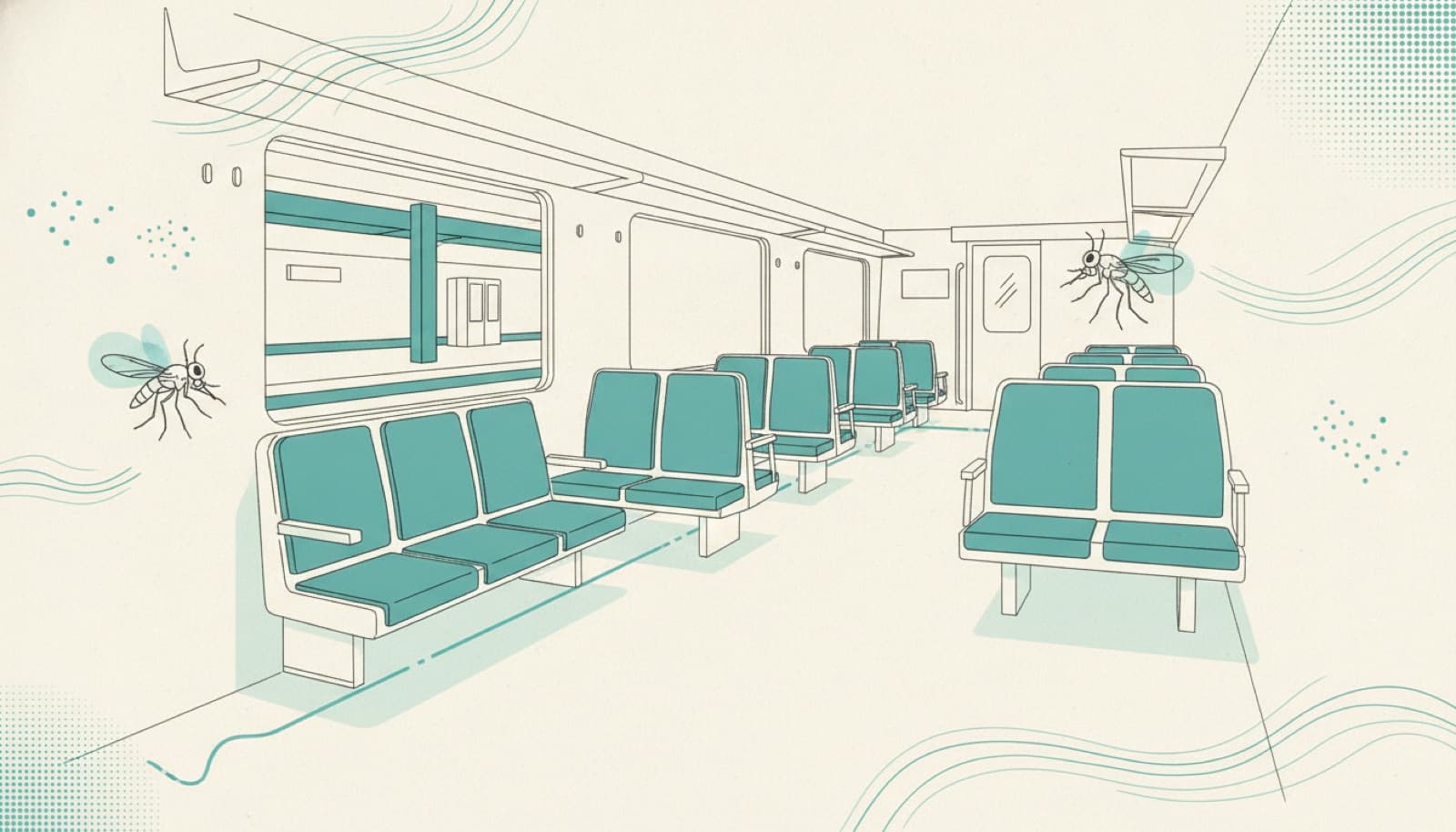
Seat frames, floor edges and waiting areas, treated on the maintenance cycle while the unit is out of service, alongside the operator's inspection and pest control contract.
Draft wording, pending regulatory approval.
01
Where it applies
Fleets and public buildings run pest control as a maintenance item: periodic inspection, a response contract for reported activity, and proofing in depots. Repeltec adds a treated-surface layer on the edges insects travel along between deep cleans. It does not replace the inspection regime or the response contract.
Where it goes: seat frames, rails and undersides, floor edges and skirting inside vehicles, luggage racks and their supports, window frames, door thresholds, and the frames of fixed benches in waiting areas. In depots and terminals: store rooms, staff rest areas, cleaning cupboards and the floor-wall junction throughout.
Not on hand contact points: grab poles, handrails, door buttons and driver controls. Not on seat belt webbing or any safety-critical component. Not on seat cushions and upholstery faces.
02
Preparation
The unit comes out of service for the treatment and the drying. Check the operator's approved chemical list before the first application and get the product added if it is not on it.
Clean the edges and let them dry. Open the doors or run the ventilation. Wear the protective equipment the safety data sheet specifies. Agree with the depot when the unit returns to service.
03
Application
A thin, even layer along seat frames and rails, the underside of seat pans, the floor edge and skirting, luggage rack supports, window frames and door thresholds.
Tested surfaces you will meet here: galvanised iron, glass, plexiglass, laminate, plywood, carpet, and polyester and cotton blends on seat backs. Powder-coated and painted metal, vinyl and rubber floor coverings are outside the tested list: spot test and record it.
Detail work on frames and brackets is faster with a microfibre cloth than with more spray. Overlap passes slightly along a continuous edge. Do not saturate, and keep the product off cushion faces and glazing that passengers look through.
04
Drying and re-entry
The unit stays out of service until treated surfaces are dry, and is aired before passengers board. Sign the unit back the way any other maintenance task is signed back, with a time.
05
Reapplication
Reapply at the interval on the label. Sooner in units that are wet cleaned frequently and on the edges passengers touch.
Align it with the existing deep clean interval rather than running a second calendar, and bring units with reported activity forward in the rotation after the contractor has dealt with them.
06
Records to keep
Vehicle or unit number, date, areas treated, product and batch number, applicator, and the time the unit returned to service.
Keep it in the maintenance record for that unit, so the history follows the vehicle, and share it with the pest control contractor. Safety data sheet and label available in the depot.
Do not say
What not to claim to the end customer
Nothing passenger facing that says the vehicle is protected, treated against illness, or free of insects. Public transport signage is read by thousands of people and is the easiest place to create a claim you cannot support.
Do not describe the product as non-toxic or harmless.
If a notice is needed at all, use the approved sentence bank and clear it before it is printed.
Use biocides safely. Always read the label and product information before use.