
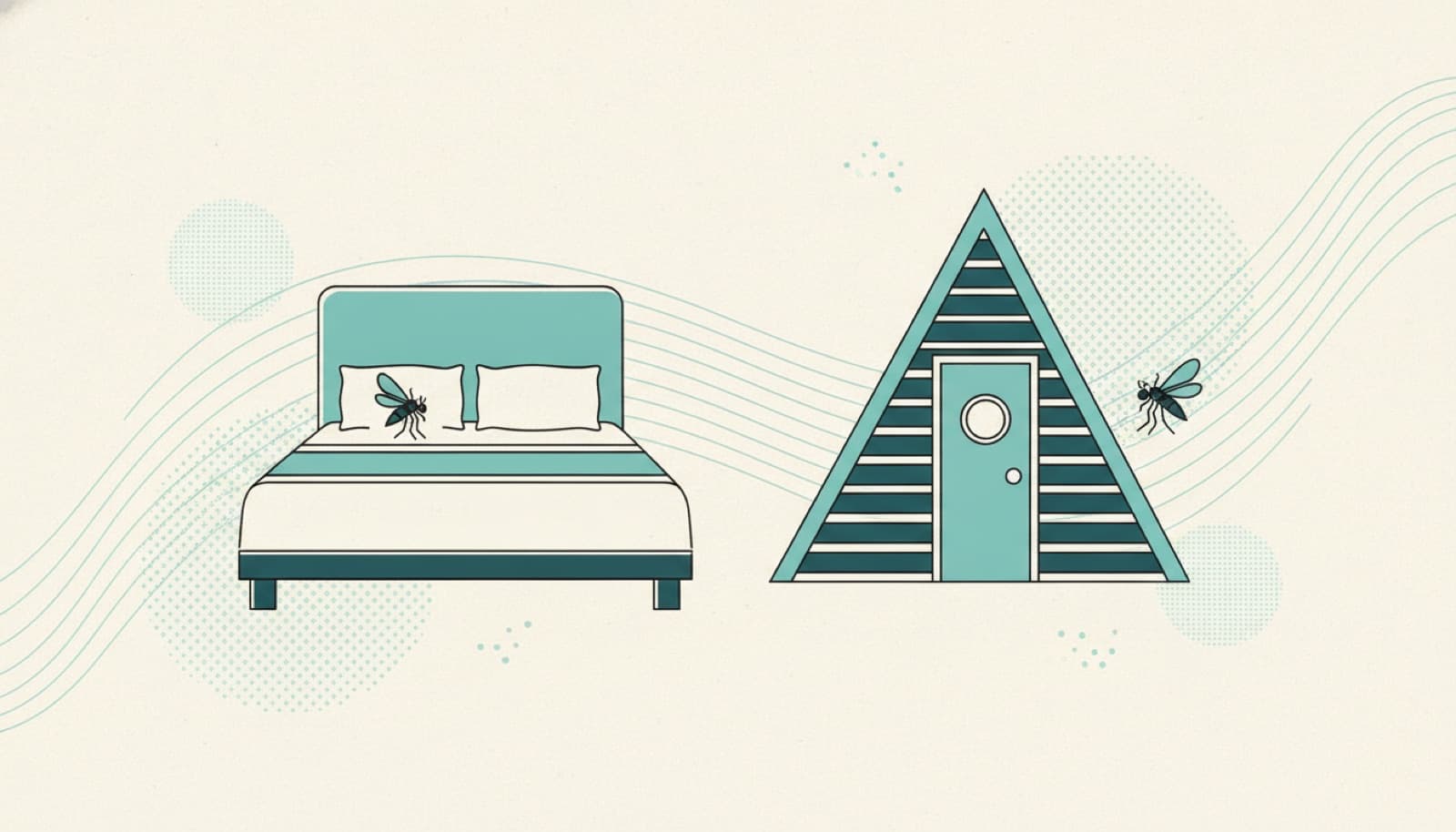
Hotels, hostels and camping accommodation
Bed frames, headboards, luggage racks and cabin interiors, treated on the housekeeping cycle while the room is out of service, as one layer of the hotel's pest management programme.
Draft wording, pending regulatory approval.
01
Where it applies
In a hotel programme, Repeltec is the treated-surface layer in rooms that are already inspected. Housekeeping checks beds on every change, the pest control contractor inspects and monitors, and Repeltec is applied to the structural edges where bed bugs and other crawling insects travel and hide.
Where it goes: bed frames and slat ends, the back of the headboard and the wall junction behind it, luggage racks and stands, wardrobe bases and rails, skirting behind and beside the bed, door thresholds and frames, window frames and sills. In cabins, caravans and glamping units, the same edges plus bench frames and storage lockers.
Not on the sleeping surface of a mattress, not on pillows or linen in use, not on towels, and never on skin. Breakfast kitchens and service areas follow the food production and catering guide.
It does not replace bed inspections, the contractor's monitoring, or the response procedure when a guest reports bites. A room with an active bed bug case goes to the contractor first.
02
Preparation
Treat while the room is out of service, not between a checkout and a same-day arrival. Check the bed, frame and headboard for signs of activity before you start; if you find any, stop, take the room out and call the contractor.
Strip the bed and vacuum the frame, slats and floor edges. Clean the edges and let them dry; dust on an edge is what the coating bonds to instead of the surface. Open the window or run the ventilation. Wear the protective equipment the safety data sheet specifies. Tell reception which rooms are out and when they can be sold again.
03
Application
A thin, even layer along each edge from a trigger sprayer or a compression sprayer. Work the joints of the bed frame, the ends of the slats and the seam where the headboard meets the wall. Then the luggage rack frame and webbing, the wardrobe base, and the skirting behind the bed.
Tested surfaces you will meet here: laminate, plywood, carpet, glass, ceramic tiles in bathrooms, and cotton, cotton blends and polyester on soft furnishings. Spot test painted, lacquered or veneered furniture before treating it; it is outside the tested list.
Overlap passes slightly so there is no gap along the route. Do not saturate upholstery or soft furnishings. Leave any bed bug interceptors and monitors where they are and do not treat them.
04
Drying and re-entry
The room stays out of service until every treated surface is dry. Make the bed and return the linen only after the frame and slats are dry, and air the room before it is released.
05
Reapplication
Reapply at the interval on the label. Sooner on luggage racks and door frames that guests touch every day, and after any deep clean or steam clean of a treated edge.
Put the cycle on the housekeeping calendar per room rather than treating on request, and review it with the contractor's findings: rooms next to a past case, rooms with high turnover and rooms with luggage stored in them may need a shorter cycle.
06
Records to keep
Room number, date, surfaces treated, product and batch number, who applied it, and the time the room was released for sale. Note any signs of activity found during the pre-check and who was told.
Keep the log with the housekeeping records and give the contractor a copy for the pest control file. The current safety data sheet and label stay in the housekeeping store. If a guest or an inspector asks what was used in a room, the answer should take one minute to find.
Do not say
What not to claim to the end customer
Do not tell a guest that a room is free of insects, or that it has been protected. A treated surface is a treated surface, not an outcome you can promise.
Do not describe the product to guests as non-toxic, harmless or safe for children.
Say what it is: part of a routine surface treatment carried out between stays, applied outside occupancy, dried and aired before the room is released, with the safety data sheet available on request. Use the approved sentence bank for anything that goes in writing to a guest.
Use biocides safely. Always read the label and product information before use.