
Stables, kennels and animal housing
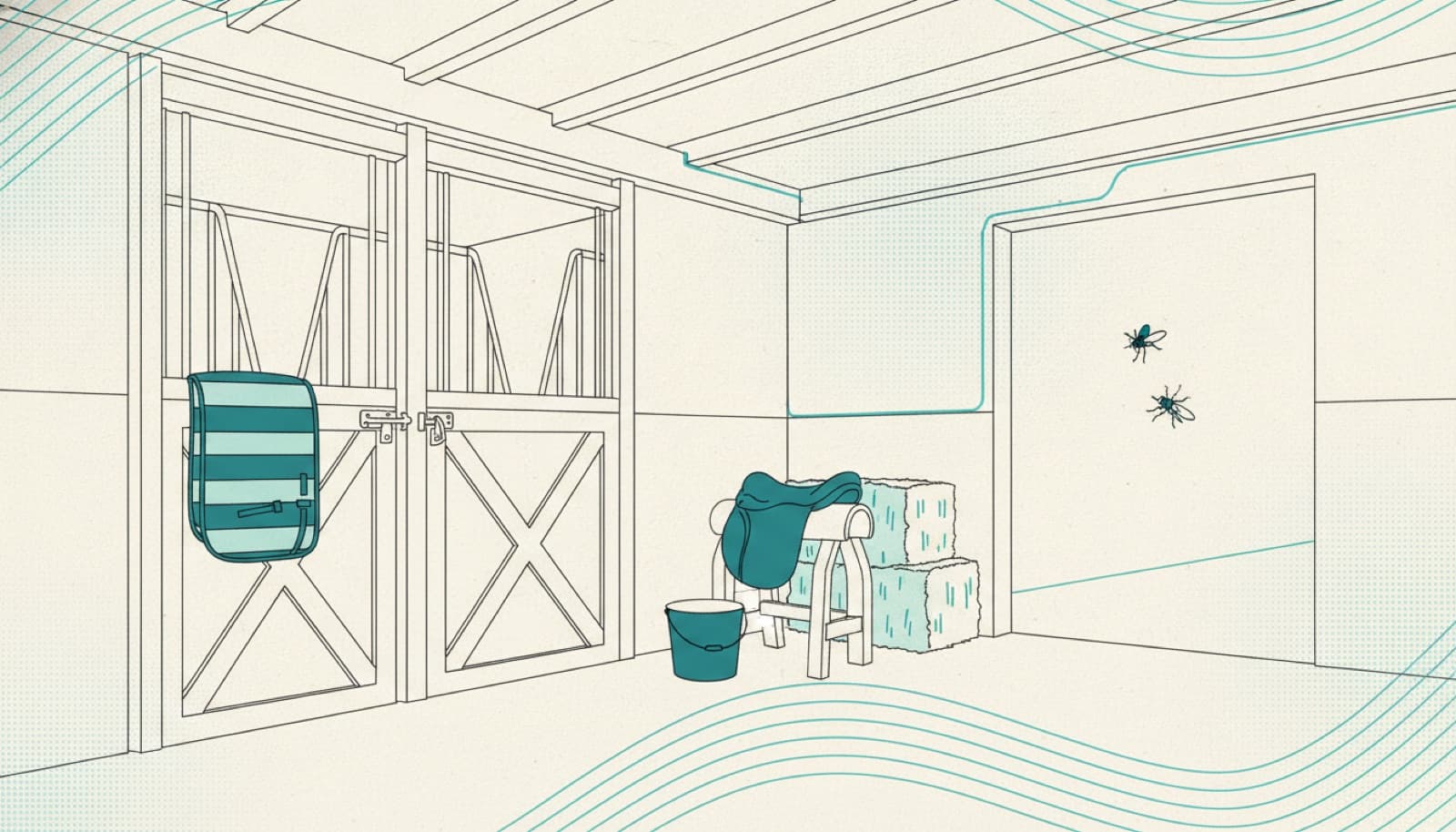
Stall edges, feed stores, tack rooms and the textiles around them, inside the yard's pest and hygiene routine. Applied to the building and its fittings, never to an animal.
Draft wording, pending regulatory approval.
01
Where it applies
Pest management in animal housing starts with muck-out, feed storage and drainage, then proofing and monitoring. Repeltec is a surface layer on the building and its fittings once those are in place. It does not replace manure management, feed hygiene, fly traps or the products your vet or adviser specifies.
Where it goes: stall partitions and their edges, door frames and thresholds, window frames, the underside of shelving, feed store racking and edges, tack room surfaces and racks, kennel frames and skirting, wash bay surrounds, and the floor-wall junction throughout.
Textiles the label covers: rugs, fly sheets, saddle pads, kennel bedding covers. Whether a treated textile may then be used in contact with an animal is a label question, and the label is the rule. If the label does not cover that use, do not do it.
Never on an animal, never on skin or coat, never on feed, water, licks or feed contact surfaces, and not on anything an animal chews.
02
Preparation
Animals out of the area, and out for long enough to cover the drying time. Remove feed, water buckets and licks; cover what cannot be moved. Muck out, clean the surfaces and let them dry.
Ventilate: a stable block with the doors open dries far faster than a closed barn. Wear the protective equipment the safety data sheet specifies. Textiles are laundered and fully dry before they are treated, and treated in a separate area from the animals.
03
Application
A thin, even layer along partition edges, frames, thresholds and the underside of shelving. Work cracks and crevices in older timber deliberately; that is the route.
Tested surfaces you will meet here: plywood, unpainted cement, galvanised iron, and cotton, cotton blends and polyester on rugs and covers. Rough-sawn or oiled timber and old brick are outside the tested list: test a small area, let it dry and look at it before doing the rest.
On textiles, an even light pass over both faces, with attention to seams, hems and folds. Hang the item and let it dry fully before it goes anywhere near an animal. Do not saturate.
04
Drying and re-entry
Animals return only when treated surfaces are dry and the building has been aired; an unheated barn in winter is the slow case. Treated textiles are fully dry, and aired, before use.
05
Reapplication
Reapply at the interval on the label. Sooner after pressure washing a stall, and after every wash of a treated textile, because the treatment does not survive a wash cycle.
Tie the building rotation to the yard's existing cleaning and maintenance schedule, and to the season, so it is not a separate job anybody can forget.
06
Records to keep
Building, stall or run, date, surfaces and textiles treated, product and batch number, applicator, and the time animals were allowed back.
Keep it with the yard's chemical and medicine records, and keep the safety data sheet and label where staff can reach them.
Do not say
What not to claim to the end customer
Do not claim that the animal is protected. The treatment is on the building and its fittings, and any claim about the animal is a different kind of product with a different authorisation.
Make no claim that it treats, prevents or reduces any condition in an animal. It is not a veterinary medicine and must never be presented as one.
Do not describe it as non-toxic, harmless or safe for pets.
Say what it is: a surface and textile repellent applied to housing and equipment while animals are out, dried and aired before they return.
Use biocides safely. Always read the label and product information before use.